Technologies

Air Quality
Indoor Air Quality Controllers ensure that the air in enclosed spaces, such as in Hospitals, Offices, Laboratories, Restaurants, and other places where hygiene is important, is safe to breath.
Your workplace may by law require that air quality assessments are conducted. This is to ensure that air conditioning and other airflow systems are not spreading contaminants such as bacteria, fungus, and viruses.
Are you a healthcare provider?
Cross infection between patients occurs because a loss of control of infectious airborne agents. Harmful microorganisms can be spread in the air, as well as remaining present on equipment, or by person to person transmission. This can include highly infectious illnesses such as H1N1 that plague busy hospitals, and life threatening diseases such as tuberculosis.
Existing solutions to reduce cross infection are limited because those technologies cannot be operated continuously in the presence of people, and kill harmful microorganisms at the same time.

O3 Bacteria Eliminator Sterilizing System is the optimum solution. It combines the beneficial features of Existing Solutions (including HEPA filter and O3 sterilization) in units that can be operated openly in occupied enclosures, without hazard to occupants. OBESSTM kills, NOT suppresses harmful micro-organisms and viruses to provide a safe and hygienic environment.
OBESS Operation Principle
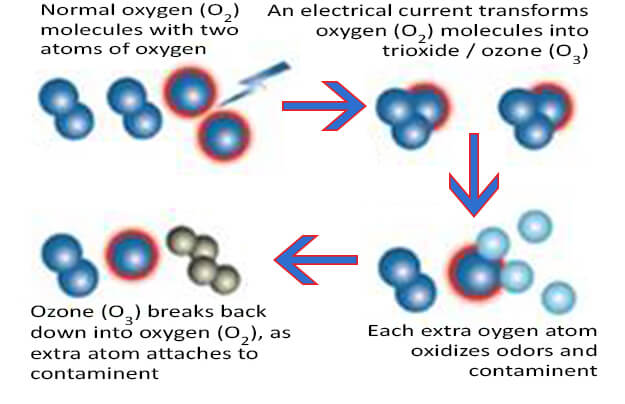
- PurificationExtractor pulls in and filters the contaminated air before enters into the sterilizing chamber.
- SterilizationAll microorganisms will be killed at the sterilizing chamber by extremely concentrated Trioxide gas (8,800ppm @ 2.07 eV for air treatment and by Hydroxyl Radical (2.70eV) for mistigation sterilizing.OBESSTM engaged Trioxide Gas and Hydroxyl Radical as sterilizing agent – Referring to our lab study at IMR, Malaysia, Microorganisms were killed at the ozone concentration of 600ppm @the Relative Humidity of 65% – Air sample is collected before sterilization starts
- NeutralizationResidue of trioxide gas will be decomposed by high efficiency air exchanger to oxygen at the output
Indoor Air Quality Assessment
IAQ standards and assessment procedures ensure that environments effectively and safely minimize contamination and the spread of microorganisms.
- Standards are defined in accordance with the Industrial Code of Practice
Indoor Air Contaminants Acceptable limits ppm mg/m3 Cfu/m3 Chemical a) Carbon monoxide 10 b) Formaldehyde 0.1 c) Ozone 0.05 d) Respirable particulates 0.15 e) Total volatile organic compounds (TVOC) 3 Biological a) Total bacteria counts 500 b) Total fungus count 1000 Ventilation Performance Indicator a) Carbon dioxide 1000
Chemical and ventilation indicator contaminants are easily removed by increasing air flow / air circulation rate. Biological contaminants however continue to pose a risk, and must be disinfected or sterilized.
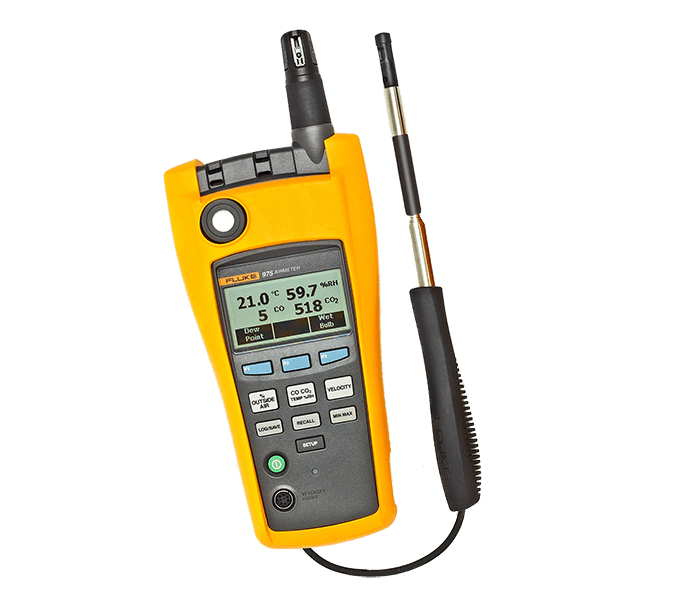
Existing Alternative Approaches
IAQ standards and assessment procedures ensure that environments effectively and safely minimize contamination and the spread of microorganisms.
Chemical and ventilation indicator contaminants are easily removed by increasing air flow / air circulation rate. Biological contaminants however continue to pose a risk, and must be disinfected or sterilized.
Chemical Disinfection
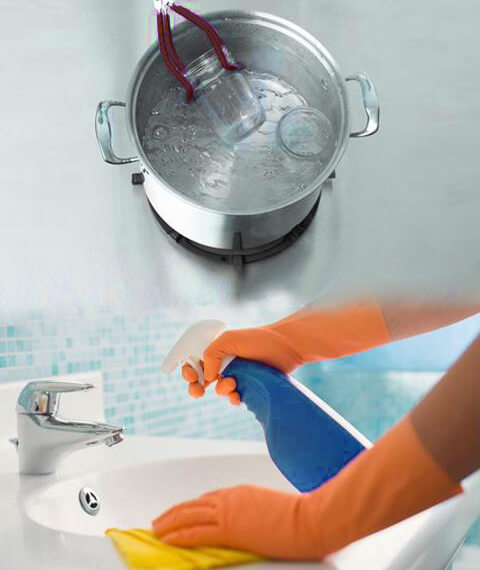
- Only suitable for disinfecting surfaces
- Messy and labour intensive approach
- Risk of chemical contamination
U.V. Germicidal Irradiation
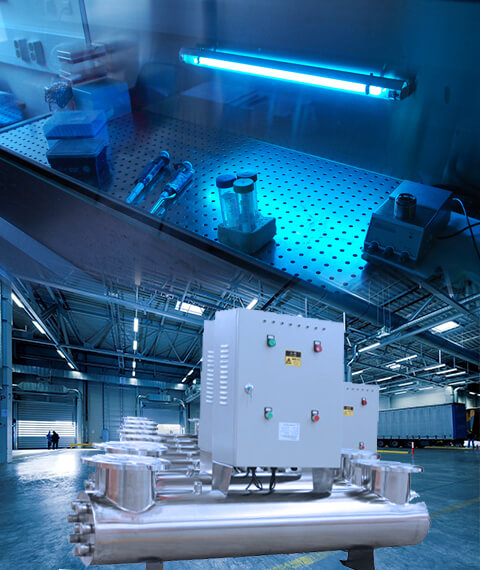
- Lengthy irradiation required
- Low oxidation potential
- Suitable for both air and water
HEPA Filtration
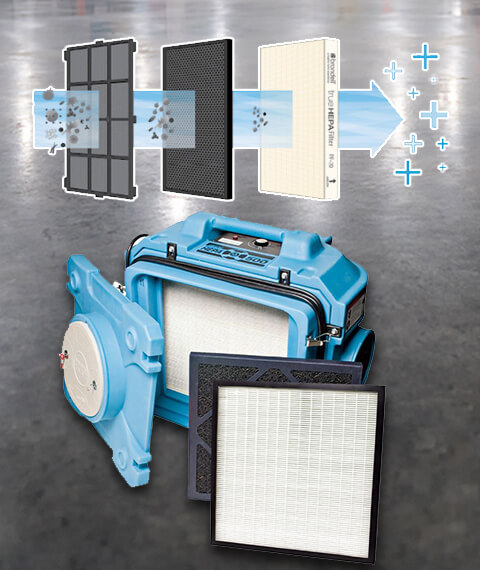
- Only suitable for air
- Filters contaminants, but does not kill the microorganisms
- Filters must be changed regularly
Ozone Fumigation
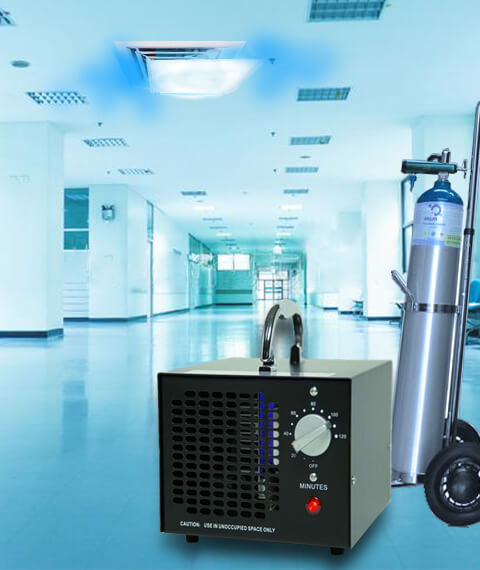
- Highly effective in killing microorganisms
- Due to toxicity, enclosed space must be evacuated for 4 hours
- No harmful byproducts, but strict regulation on O3 ppm

U.V. and HEPA Combination
- U.V. light does not kill microorganisms that trap in the filter
- Sterilization process for U.V. is too slow at the high airflow rate
- Therefore combination of both is not a long term solution

Fully Funded and Monitored by the Malaysian Ministry of Science, Technology and Information
OBESSTM
Our innovation in infection control technology has state approval because of its safety, simplicity, and rapid decontamination procedure for both enclosed and open areas – making it specifically suitable for the healthcare market.
MOSTI heralded the OBESS Sterilization System as breakthrough – making hospital environments safer for patients, free of cross-contamination.